
– Kiavash Shakibaee, Microsoft FastTrack recognised solutions partner
Regulated environments (government agencies, healthcare providers, financial institutions, and education bodies) operate under strict compliance frameworks, audit requirements and public accountability standards. These organisations can’t simply adopt new technology on the fly.
Many are already running their core operations on Microsoft Business Applications. Power Platform powers their workflows. Dynamics 365 manages their cases, customer relationships and service delivery. These aren’t peripheral systems anymore. They’re the backbone of the organisation.
The problem?
The platform beneath them is evolving faster than ever. In fact, faster than any regulated business group has even experienced before.

Microsoft has begun releasing major features regularly and often no longer holding out for the bi-annual major release. AI capabilities that were experimental a few months ago are now production features. Copilot is embedded across the suite. Autonomous agents are being pitched as the next evolution of automation.
For organisations already deep into the Microsoft ecosystem, this creates a unique pressure. You can’t pause operations to catch up. You can’t rip and replace systems your teams depend on daily. But you also can’t ignore this pace of change or the fact that AI is already reshaping what’s possible.
The question isn’t whether to adopt these capabilities. It’s how to scale them deliberately, in a way that maintains control, meets compliance requirements, and actually improves how work gets done.
From platform capability to operational reality
Microsoft Business Applications aren’t just tools anymore. They’re where operational knowledge lives.
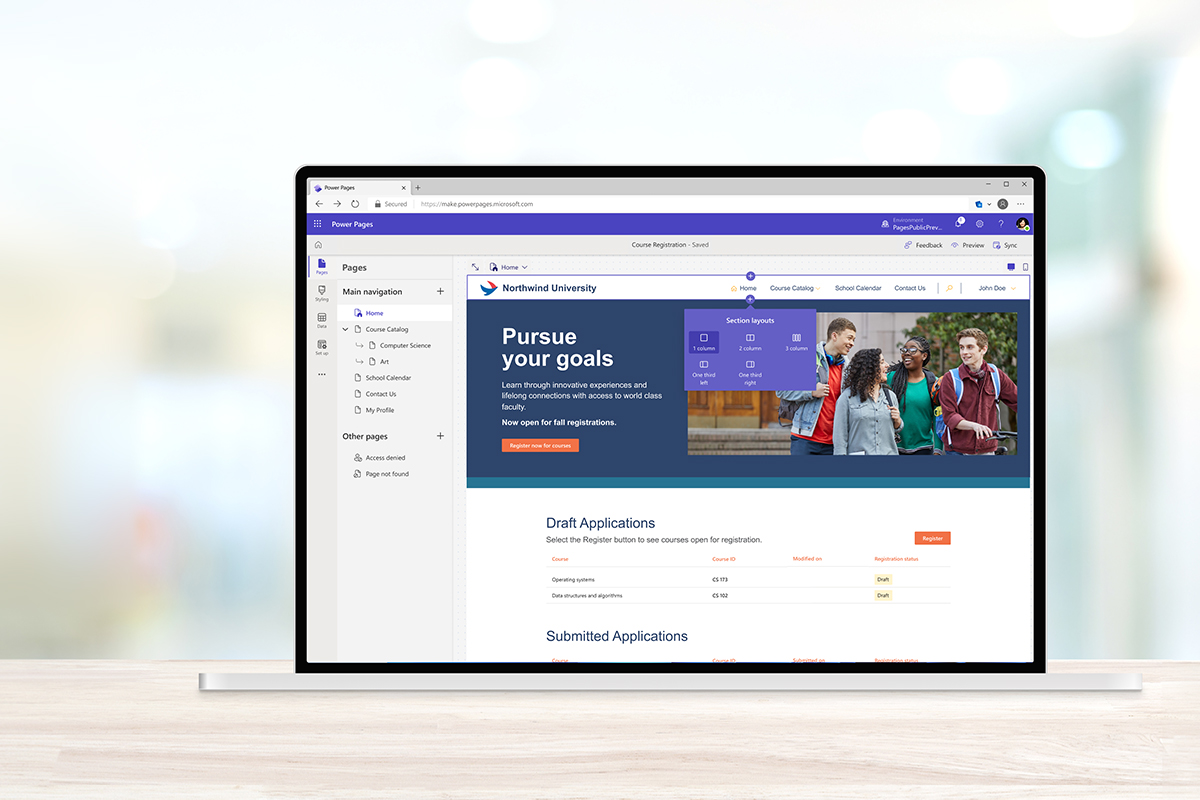
Power Platform lets teams build quickly and adapt as needs change. Dynamics 365 handles the complex, repeatable processes the business can’t afford to break. Together, they create a foundation that’s both flexible and consistent.
In regulated environments, this matters. When you build on a shared platform with common governance, you get clearer standards, better reuse, and alignment across teams without fighting for it.
Over time, this foundation becomes the operational backbone for how work actually gets done. It underpins frontline delivery, drives reporting and provides continuity as policies and services evolve.
The challenge is, this foundation is now also where AI is landing.

AI Agents as part of everyday work
AI isn’t coming. It’s already here. Every industry is using it. Your clients are using it. If your organisation hasn’t adopted AI in some meaningful way, you’re already behind.
Client expectations have fundamentally shifted in just two years. People now expect faster responses, more personalised service and systems that adapt to them. These aren’t luxuries. They’re baseline expectations shaped by AI-powered tools people use every day.
AI Agents represent the next evolution of workflow automation. Unlike traditional automation, they operate autonomously, interpreting context, making decisions and acting within boundaries you set.
This changes the concept of system design entirely.
Traditional automation required carefully structured data. Every field defined. Every rule mapped. It worked, but it was rigid. Changing business needs meant rebuilding workflows, restructuring databases and rewriting scripts.
AI Agents work differently. They interpret unstructured data, emails, documents, case notes in plain text. They apply reasoning to situations that don’t fit neat categories and evolve with your business needs without requiring a rebuild.
This raises a genuine question: if AI can extract meaning from free text and make decisions without perfectly structured data, what’s the real value of the rigid field-by-field architectures we’ve relied on?
The answer isn’t quite to abandon structure. Regulated environments still need audit trails, compliance controls and data integrity. But it does mean rethinking where precision matters and where flexibility serves you better.
Through Microsoft Copilot Studio, these agents work within your existing applications and workflows, operating inside the same identity, access and data controls that already govern your environment. This isn’tungoverned AI, but AI capability deployed within established boundaries, grounded in real operational work.
Scaling requires more than delivery
Here’s the pattern we see repeatedly:
Teams build something that works. Usage spreads. Value becomes visible. Then the questions start.
Who’s responsible for this across the organisation? How do we maintain standards as more teams build their own solutions? What happens when the person who built this leaves? How do we know what’s running in production versus what’s still experimental?
These aren’t technical questions. They’re operational ones.
The challenge isn’t building the first solution. It’s scaling capability across the organisation in a way that remains visible, accountable and sustainable.
This requires more than good delivery. It requires an operating model that addresses governance, enablement and operations together. Not as separate workstreams, but as a connected capability that evolves with usage.
Without this, success creates its own problems. Solutions proliferate. Standards drift. Support becomes reactive. Leaders lose visibility into what’s actually running and what risk it carries.
What this looks like in practice
Organisations that scale Microsoft Business Applications and AI well share common characteristics.
Capability grows in a way that’s visible to leadership. Not hidden in departmental silos or spread across untracked environments. Leaders can see what’s being built, what’s in use and what value it’s delivering.
Standards support consistency without creating bottlenecks. Teams can focus on solving business problems rather than fighting governance processes. The framework enables rather than restricts.
Security and compliance are embedded into delivery from the start. Not bolted on later. Not treated as a separate workstream. They’re part of how solutions are built and deployed.
The platform evolves as the organisation’s needs and maturity change. What works at 10 apps doesn’t work at 100. The operating model adapts to match the scale and sophistication of what’s being delivered.
The context differs between federal government, state portfolios, enterprise environments, health and education institutions. But the intent is shared.

A grounded path forward
Microsoft continues to evolve its platforms at pace. Power Platform and Dynamics 365 receive regular updates. AI capabilities are becoming more integrated into everyday tools and workflows. This isn’t slowing down.
For regulated organisations, this pace creates both opportunity and pressure. Systems that are live today need to adapt. Governance models need to mature. Teams need support as capability expands.
Organisations that navigate this well treat Microsoft Business Applications and AI as long term operational capabilities. Not projects with end dates. They invest in foundations. They design for evolution. They ensure progress remains clear, accountable and effective over time.
At The Factor, we work with organisations operating in complex, high accountability environments. Our focus is on helping leaders scale capability in a way that aligns with how their organisation already operates.
As Microsoft Business Applications and AI Agents become more deeply embedded across regulated industries, the decisions leaders make now will shape how confidently those capabilities grow.
If this is a conversation you’re starting internally, taking the time to set the frame first makes what follows far more achievable.